Straight answer
Yes, you can still stay at Frying Pan Shoals Light Station
The steel platform 32 miles off Cape Fear, under its original name and open for trips.
The short answer
Yes. Frying Pan Shoals Light Station, the platform many people still know as Frying Pan Tower, is open for two-night trips. As of October 2026 a trip costs $2,000 per person, and that covers the boat crossing, your bunk, meals and a station host. You book directly with the station at fpsls.com/trips, not through Airbnb or a hotel booking site.
See the tripsAs of October 2026 · Updated October 17, 2026
Is the Light Station open to visitors?
Yes. The station's visitor program has returned and trips are on the calendar. Each trip is two nights aboard, in a small group, with a station host. The trips page shows each trip's dates and status; dates are proposed until the station confirms them.
Visits are arranged directly with the station's stewards through fpsls.com. There is nowhere else to book one.
What is a trip like?
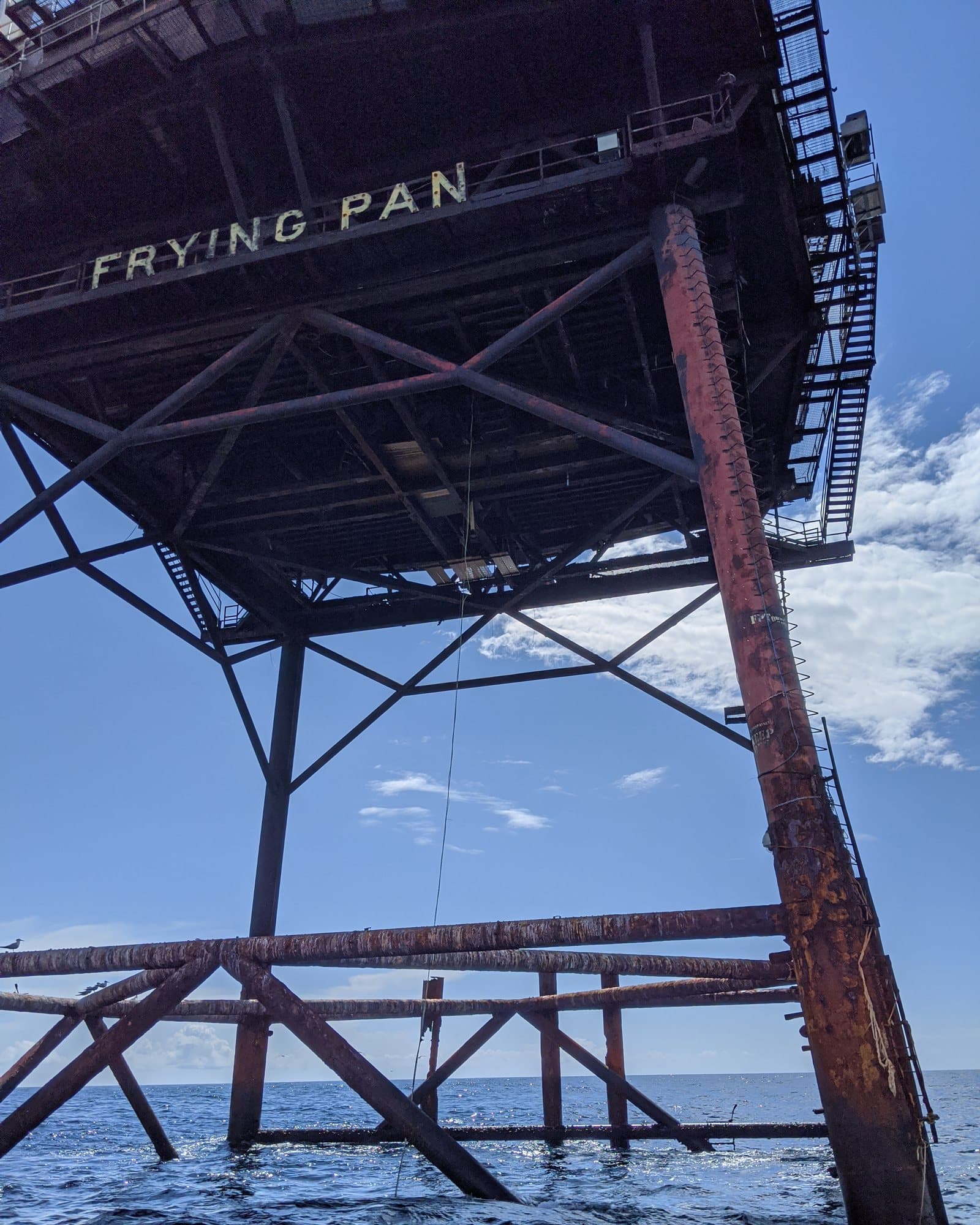
You live about 80 feet above the open Atlantic, in quarters built for a resident Coast Guard crew, not for tourists. The coast sits below the horizon, so the sun rises and sets over open water, with nothing but ocean in every direction. Former crewmen remembered the station for its long isolation, its sudden danger, and sunrises they never forgot.
This is a working restoration, not a resort. You are aboard while the station is being brought back, and your trip helps pay for that work.
What does a trip cost?
A two-night trip costs $2,000 per person, as of October 2026. There is no nightly rate: every trip is two nights. Whatever visitors pay goes to the restoration.
| Trip price | $2,000 per person, as of October 2026 |
|---|---|
| Booking fee | $500, paid at booking. Part of the price, not added to it. |
| Balance | $1,500, drawn automatically five days before departure, after a reminder. |
The price covers:
- the boat crossing out and back with one of the station's approved charter captains
- two nights in the quarters where Coast Guard crews once lived
- meals for the whole stay
- a station host aboard from departure to return
- fishing from the deck and the run of the structure
It is not a hotel, and it is not on Airbnb or any booking site. The full terms are in the Fee and Cancellation Policy.
How do you get there?
By boat, across 32 miles of open Atlantic, with one of the station's approved charter captains. The crossing takes over an hour from the Cape Fear coast, depending on the sea.
Helicopter service is planned. It is not offered yet because offshore passenger service requires regulatory approvals. When it is ready, it will be announced here.
There is no road, no ferry and no regular dock at the station. You transfer onto the structure by hoist in open water, then climb steep stairs to the deck.
What should I know before booking?
- Weather decides. Every departure depends on weather and sea state. If the station cancels for weather or safety, what you have paid becomes credit toward another trip.
- Refunds. If the station withdraws a trip for any other reason, you get everything back. If you cancel, the booking fee is kept. Cancel more than five days before departure and nothing more is owed; cancel within five days and the balance becomes credit toward another trip. A no-show gets no refund or credit.
- The waiver. Everyone aboard signs the station's waiver. The station asks for it five days before departure; it can still be signed any time before boarding, and anyone who has not signed does not board.
- Access. The station is not accessible. Boarding means a hoist transfer in open water, then steep stairs, with no elevator or ramp.
- Under 18. Ages 16 and 17 come with a parent or guardian in the same party, who adds them to the booking and signs the minor addendum. Under 16 only with the station's written approval in advance.
- Changes to your group. The person who booked can swap someone in their party until five days before departure, by emailing the station.
How do I book a trip?
- Choose a trip on fpsls.com/trips and the number of places you need.
- Pay a $500 booking fee per person on a secure payment page. It is part of the price, not added to it.
- Each adult in your party gets their own link to the Station Portal to add their details and sign the waiver; a parent or guardian adds anyone under 18. The station asks for signatures five days before departure.
- The $1,500 balance is drawn automatically five days before departure, after a reminder.
Booking fewer than ten days before departure is by card only, and fewer than five days before departure the whole price is paid at booking.
Plan your visit
Trips are open for booking at fpsls.com/trips. To hear about new dates first, join the interest list on the Visit page. Questions before you book go to station@fpsls.com, and a person reads every one.
Who owns the Light Station now?
Frying Pan Shoals Light Station belongs to a group of private co-owners. In July 2026, co-owners who were stepping away sold their interests within that existing group; no outside buyer came in. Several of the co-owners have been part of the station for years, and it has been privately owned since the federal government sold it at public auction in 2010.
The station is not for sale. The co-owners share one aim: keep a one-of-a-kind piece of American maritime history standing, and let people other than its owners experience it.
FPTower Inc., the nonprofit that ran the visitor program here for years, has said that its direct stewardship of the station ended in 2026 and that its work has moved ashore, to maritime safety, science and education programs in coastal communities across the Carolinas. It has no part in the station today: no ownership, no role in trips or bookings, and no affiliation with the co-owners. Trips are booked only through this site.
Is the live cam coming back?
There is no live cam at present. A public camera is planned, but no date is set; restoring the station's power and communications comes first. The underwater and flag cameras that streamed from the station in past years were run by other organizations, not the station, and no camera is operating from the station now. Join the station updates list for news when a camera is back.
Quick answers
Looking for the hike? Frying Pan Lookout, the fire tower near Asheville on the Blue Ridge Parkway, is a different place: see the National Park Service visitor guide.
Why does the station use this name?
Frying Pan Shoals Light Station is the name on the Coast Guard's own engineering drawings from 1963, and the name in the federal record. Over the years the platform became widely known as Frying Pan Tower. Both names mean the same structure, standing on the same shoal since 1964. This site uses the original.
Can you see the station from shore?
No. At 32 miles out it sits below the horizon from every beach. You see it from the water on the approach, or from the air.
How far offshore is the station?
32 miles off Cape Fear, North Carolina, at the seaward end of Frying Pan Shoals. Over an hour by boat.
Is it in international waters?
No. It stands in U.S. federal waters off North Carolina: state waters end three miles out, and federal waters run to 200.
Is it safe?
It is a 1964 steel platform under restoration, 32 miles from shore, and the trips are run that way: a station host aboard, a safety briefing when you arrive, a waiver everyone signs, and departures that wait for the weather. The open-water transfer and the climb are the parts to think about honestly before you book.
Is it haunted?
Not that anyone has told us. Sixty years of Atlantic weather on a steel platform make enough noise at night without any help.
Is the light still working?
No. The station retired from Coast Guard service in 2004 and is no longer a navigation aid.
When was it built?
It went into service on November 24, 1964, replacing the lightships that had marked Frying Pan Shoals since 1854.
Is it for sale?
No. The co-owners hold it for preservation.
Sources
Where the facts on this page come from.
- U.S. Coast Guard Historian's Office — Frying Pan Shoals Light Tower (for the 1964 service date and the lightship history; its status fields are out of date)
- The 1963 Coast Guard drawings and the station's history
- Press and media: the approved facts and the dated timeline
- Fee and Cancellation Policy, the terms behind the price and refund lines
- Trips on the calendar, with dates and availability
- Weather on the station, from NOAA buoy 41013

Keep reading
- Trips on the calendar The dates, the price per person, the terms, and how to book a place.
- Visiting the station The crossing, the structure, boarding requirements, and the waiver every visitor signs.
- Frequently asked questions Overnight stays, access, ownership, and confirmation that this is the same structure.